
As US businesses finalize their tech budgets for Q4 2026, the application of AI in marketing is rapidly transitioning from experimental chatbots to fully autonomous agentic commerce. Marketing leaders are no longer just asking for faster content generation; they are demanding predictive revenue modeling, autonomous campaign orchestration, and zero-touch lead routing.
According to Q4 2026 intelligence reports from McKinsey, 40% of large companies are actively scaling AI agents. Concurrently, enterprise analysts at Emarsys note that 89% of B2B buyers state a supplier’s use of artificial intelligence positively influences their brand loyalty. However, the days of generating endless spam emails and generic blog posts are over. Today’s consumers are experiencing content fatigue, forcing Western tech and enterprise brands to shift their focus from volume to resonance.
If your enterprise wants to remain competitive in a saturated digital landscape, here are the four crucial AI in marketing trends you must integrate into your current technology stack.
1. How AI in Marketing Drives Agentic Commerce
The most significant shift in 2026 is the rise of the autonomous AI agent. Marketers are no longer manually pulling lists from a CRM, writing an email, and scheduling a broadcast. Instead, they are deploying agentic platforms that orchestrate the entire funnel.
Enterprise platforms are actively moving toward “Agentic Suites.” These autonomous agents can evaluate real-time inventory, adjust pricing based on competitor movements, and autonomously build cross-channel campaigns. For a US-based SaaS company or high-ticket e-commerce brand, this means your AI in marketing stack is not just assisting your team it is executing the strategy in the background, freeing your executives to focus entirely on overarching brand architecture.
2. Predictive Analytics Becomes a Margin Driver
For years, predictive analytics sat in the “interesting but optional” category for most marketing teams. As customer acquisition costs (CAC) continue to skyrocket across North America and Western Europe, predictive modeling has evolved into a mandatory margin driver.
Instead of analyzing past quarterly sales reports to guess what buyers want, AI processes unified customer data to predict lifetime value (LTV), identify immediate churn risks, and reallocate advertising budgets in real-time. However, enterprise leaders must note the caveat: predictive AI models are only as accurate as your data foundation. Brands suffering from fragmented, siloed CRM data will continue to see their AI initiatives underdeliver.
3. The End of Third-Party Tracking
With global privacy regulations tightening and the complete phase-out of traditional third-party tracking cookies, US marketers are being forced to completely overhaul their data strategies.
First-party data is the new gold standard. Top marketing organizations are utilizing AI to build deep, hyper-personalized profiles based exclusively on direct customer interactions, authenticated website logins, and zero-party survey data. Generative AI tools are then used to synthesize this secure data into highly targeted, compliant, 1-to-1 messaging that respects consumer privacy while maintaining engagement.
4. Combating the Consumer Trust Deficit
As the volume of AI-generated content explodes, consumer trust is dropping. While buyers love the speed AI provides (69% of buyers would switch suppliers if an AI agent found a better option), they distrust how brands handle data privacy.
To combat this, leading US enterprises are employing “Human-in-the-Loop” orchestration. While the AI handles the heavy lifting of data analysis, segmentation, and initial copywriting, human strategic judgment is mandated as the final checkpoint. Ensuring that your marketing does not sound robotic, tone-deaf, or generic is the ultimate competitive advantage.
External References & Industry Reports
For enterprise tech executives looking to dive deeper into the raw 2026 data driving these shifts, here are the primary reports referenced in this analysis:
- McKinsey & Company: The AI Operating System: A New Way for CEOs to Run the Enterprise (October 2026)
- Emarsys: Brand Loyalty Trends: 6 Shifts Reshaping Customer Loyalty in 2026 (May 2026)
- SAP Emarsys: Global B2B Buyer Loyalty Index 2026
Pro Hint: Standardize Your Brand Voice
If you want consistent brand voice across all generated copy, you must stop employees from “freestyling” their prompts. Build a centralized internal library of prompt templates using strict parameters. Instruct your team to always use the RTC Framework (Role, Task, Constraints) to ensure the AI output matches your enterprise brand guidelines perfectly without drifting into AI jargon.
Upgrade Your Marketing Stack
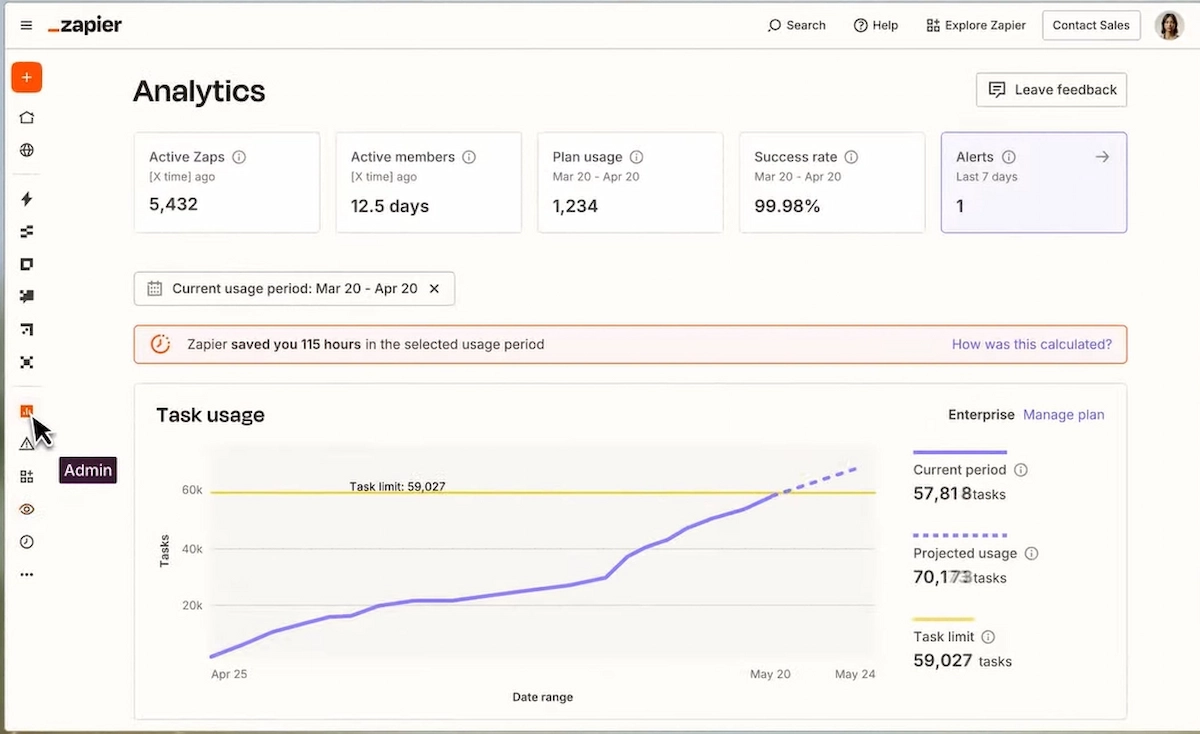
- Sponsored Resource: Ready to automate your lead routing and secure your data pipeline? Connect your inbound channels directly to your CRM using Zapier’s Advanced AI Automations, allowing autonomous agents to qualify your highest-tier leads 24/7.
- Need to train your marketing team on AI fundamentals? Learn how to structure their instructions with our perfect AI prompt RTC framework guide.
- For the latest updates on enterprise tools and industry shifts, explore our AI News hub or reach out directly on The NexGen AI Contact Page.