The Core Announcement: Lifting the Claude Ultra Session Limit
Anthropic officially removed the Claude Ultra session limit, eliminating the strict five-hour cap for verified users according to recent coverage from The New Stack. This infrastructure update allows continuous, long-context interactions within Claude Code without artificial session terminations. However, Anthropic maintained the overarching weekly usage limits, forcing operators to balance extended continuous sessions against their total token allocation.
Prior to this update, developers engaged in complex debugging pipelines would routinely hit a hard architectural stop. You would be forced to spin up a new session, re-inject massive codebases, and waste API tokens merely re-establishing the context window. That friction is now completely gone.
The decision signals a massive maturation in Anthropic’s cloud infrastructure capabilities. Managing memory across multi-hour agentic sessions requires immense compute orchestration, proving their backend can now sustain heavy, continuous enterprise workloads without failing.
Impact 1: Eliminating the Five-Hour Forced Reset
The original Claude Ultra session limit was not a simple product choice; it was a necessary server defense mechanism. Large Language Models suffer from severe attention degradation and memory bloating during continuous interaction, making long sessions exponentially more expensive for the host.
By forcing a hard reset every five hours, Anthropic prevented runaway context windows from dragging down system-wide latency. It acted as an automatic garbage collection cycle for their primary inference clusters, keeping the platform stable for all users globally.
Upgrades to their internal memory routing architectures have clearly mitigated this operational bottleneck. The infrastructure can now handle sustained heavy token contexts without the catastrophic slowdowns seen in earlier iterations of the model.
| Session Metric | Previous Constraints | New Architecture (Verified) |
| Max Session Time | 5 Hours | Unlimited |
| Context Refresh | Forced Manual Reset | Continuous Persistence |
| Weekly Token Quota | Strictly Capped | Strictly Capped |
| Primary Use Case | Short-burst prompting | Multi-day agentic coding |
Impact 2: Unlocking Continuous Agentic Coding
For developers deploying autonomous coding agents via GitHub repositories, the removal of the Claude Ultra session limit fundamentally alters project architecture. Agents rely on continuous loops of writing, testing, and iterating code within a single shared environment.
Previously, agents lost their terminal state and reasoning history completely when those arbitrary timeouts occurred. Operators had to build complex state-saving workarounds just to keep the AI functioning overnight without human intervention.
Now, a single debugging session can persist through an entire continuous workday. You can deploy a coding agent at morning initialization, let it parse logs and compile binaries for eight hours, and return to a completed pull request without intervention.
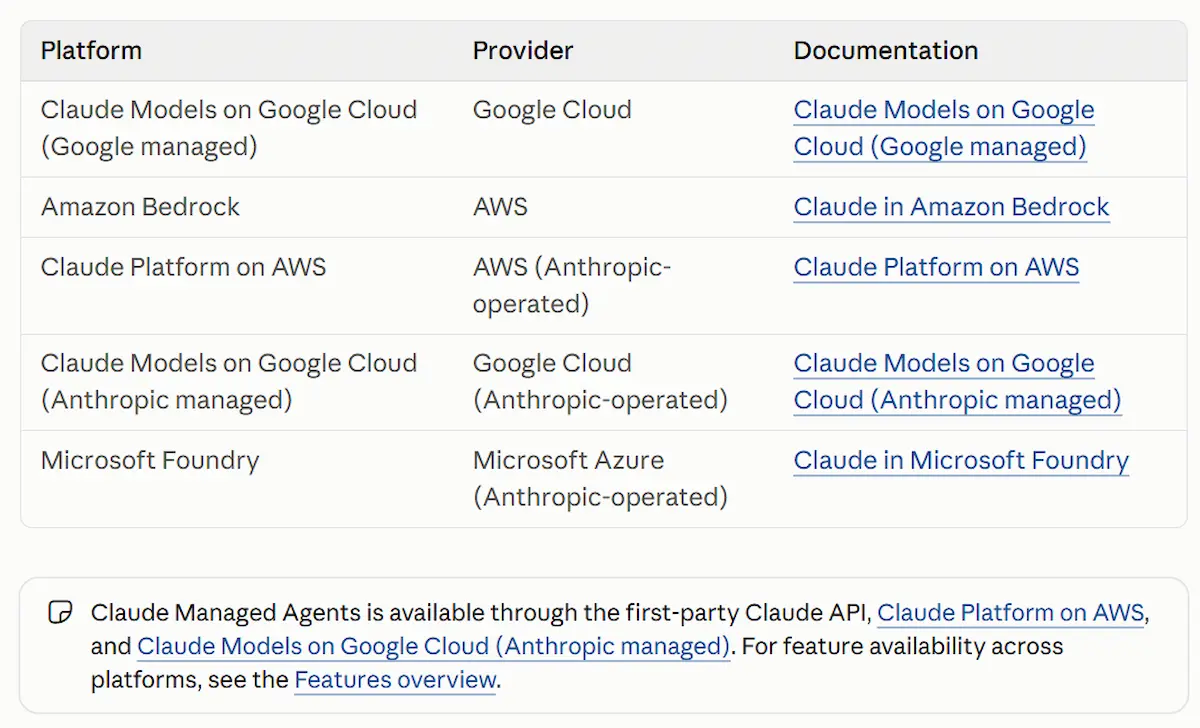
While the immediate session cap is gone, the hard reality of weekly token quotas remains firmly in place. You can now run a twelve-hour continuous debug, but doing so will drain your weekly allocation at a terrifying speed if left unchecked.
The expanded Claude Ultra session limit is a double-edged sword for resource management. Without the forced reset, developers must implement strict internal monitoring to prevent a single runaway script from exhausting an entire team’s access to the API.
Implementing hard token guardrails within your API calls is no longer optional for serious deployment. Operators must set strict output constraints to ensure long sessions do not generate useless, quota-draining conversational filler.
Are extended sessions draining your budget? Forecast your exact token burn rate before you deploy. Download the API Cost Calculator in our free NexGen AI Insider Hub.
Impact 4: Exponential Cost Implications for APIs
Extending session length directly impacts your billing architecture, especially when utilizing the model for backend services. Longer continuous sessions mean substantially larger context payloads are sent with every subsequent prompt.
Every time you query the model deep into an eight-hour session, you are paying to re-read the entire accumulated history from step one. This compounds API costs exponentially if the active context window is not actively pruned by the operator.
To mitigate this billing trap, engineers must adopt aggressive context summarization techniques. You must instruct the system to condense its own memory periodically, preventing the payload from reaching maximum token capacity.
def condense_agent_memory(active_session_log):
    # Triggers when context reaches 80% capacity to prevent quota drain
    payload = {
        "task": "Summarize terminal state and drop early diagnostic logs",
        "data": active_session_log
    }
    return api_call(payload, enforce_minification=True)
Impact 5: Market Pressure on OpenAI and Google
This infrastructure upgrade places immediate pressure directly on OpenAI’s GPT-6.1 Terra and Google’s latest Gemini architectures. Both competitors have struggled to offer truly infinite session persistence without passing exorbitant compute costs directly to the end user.
Anthropic’s targeted strategy focuses on the elite developer demographic that requires uninterrupted flow states. By prioritizing session stability rather than pure benchmark scores, they capture the highly lucrative practical engineering market.
However, competitors are rapidly deploying hybrid API models designed to pause and resume states natively. The enterprise AI race is no longer about who has the largest context window, but who can sustain it the longest without crashing.
Final Verdict on Enterprise Deployment
The elimination of the Claude Ultra session limit removes a massive operational roadblock for technical agencies and automation freelancers. It proves that the model is ready for serious, sustained deployment in mission-critical environments.
Enterprise leaders must immediately update their internal developer guidelines to reflect this change based on Anthropic’s official documentation. The focus must shift from working around arbitrary session timeouts to actively managing context bloat and weekly quota consumption.
Ultimately, this update empowers developers to treat LLMs as persistent team members rather than transient search engines. Master the new cost dynamics, and your development pipeline will scale exponentially.
Explore More on The NexGen AI
- Latest Updates: Browse our latest coverage on artificial intelligence breakthroughs
- Automation Guides: Claude Computer Use: 5 Powerful and Shocking Automation Features