
If you want to understand how ai agents work, the easiest way is to think of them as goal-driven systems. They do not just answer questions like a chatbot, and they do not only follow fixed rules like basic automation. Instead, they observe a task, plan the next step, use tools when needed, and keep moving toward a result.
That is why AI agents are getting so much attention in business, productivity, and software automation. In this guide, we will break down how ai agents work in simple language, with examples, benefits, limitations, and practical use cases.
The Quick Answer
Here is the shortest explanation of how ai agents work: a user gives the agent a goal, the agent breaks the goal into smaller tasks, chooses tools or actions, checks the result, and keeps going until the task is complete.
In other words, the agent is not just responding. It is trying to accomplish something.
What Is an AI Agent?
An AI agent is a system designed to take action toward a goal. It can use language understanding, decision-making, tools, memory, and feedback loops to complete a task with less manual input.
This makes it different from a standard chatbot. A chatbot mainly responds to a prompt. An AI agent can respond, decide, act, and adjust its next move based on what happens.
If you missed the earlier post, you may want to read: AI Agents vs Chatbots vs Automation.
To explore the bigger picture, see our main guide here: AI Agents Explained.
How AI Agents Work Step by Step
The process behind how ai agents work is easier to understand when you break it into steps.
1. The user gives a goal
The process begins when a user gives the agent a task. This might be something simple like “summarize these emails” or more complex like “find the best three project management tools and compare them.”
2. The agent interprets the request
The agent reads the prompt and figures out what the user really wants. It identifies the goal, constraints, and any required actions.
3. The agent creates a plan
Instead of jumping straight to the answer, the agent can split the goal into smaller steps. This planning ability is one of the main reasons people are interested in how ai agents work.
4. The agent chooses tools or actions
If the task requires external data or another system, the agent may search the web, check a calendar, query a database, send a message, or use another connected tool.
5. The agent checks results
After taking an action, the agent evaluates the outcome. If the result is incomplete or incorrect, it can try a different approach.
6. The agent continues until the goal is reached
This loop of planning, acting, and checking is what makes AI agents feel more dynamic than simple automation tools. They can keep moving until the objective is achieved or until they need human help.

Tools, Memory, and Planning
Three major parts shape how ai agents work: tools, memory, and planning.
Tools
Tools let the agent do real work outside the model itself. Examples include search engines, spreadsheets, calendars, email systems, CRM platforms, and internal company apps.
Memory
Memory helps the agent remember useful context. This can include conversation history, user preferences, task progress, or facts gathered earlier in the workflow. Good memory makes the agent more useful and less repetitive.
Planning
Planning is the part that helps the agent think ahead. Instead of treating every request as a one-step answer, it can map out what needs to happen next. That is a big part of why AI agents feel smarter than simple bots.
When these three pieces work together, the agent can behave like a digital coworker rather than a basic assistant.
Real-World Example
Let’s say a marketing team wants an AI agent to help with competitor research.
- The user asks the agent to compare three websites.
- The agent searches for the sites and gathers key details.
- It pulls pricing, features, positioning, and customer messaging.
- It organizes the information into a summary.
- It highlights strengths, weaknesses, and patterns.
- Finally, it gives the team a draft analysis to review.
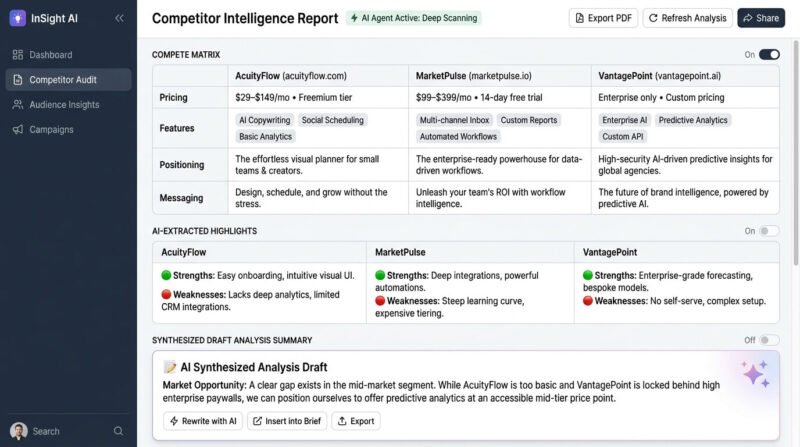
This example shows how ai agents work in a real workflow. The agent does not just answer with one sentence. It performs multiple steps, handles information, and builds toward an outcome.
Another useful example is inbox support. An AI agent can read incoming messages, identify the topic, draft a reply, and escalate urgent cases to a human. That combination of action and judgment is what makes agents valuable.
Main Benefits of AI Agents
There are several reasons why businesses and creators are interested in how ai agents work.
- They save time. Agents can handle repetitive multi-step work.
- They reduce manual effort. They can move from task to task with less supervision.
- They improve productivity. Teams can focus on higher-value work.
- They can use multiple tools. Agents can connect systems that normally require a human between them.
- They adapt better than fixed automation. When the situation changes, an agent may still be able to continue.
For many workflows, that flexibility is the biggest advantage.
Limitations to Keep in Mind
Even though AI agents are powerful, they are not perfect. Understanding the limits is just as important as understanding how ai agents work.
- They can make mistakes. Bad inputs can lead to bad outputs.
- They need guardrails. Permission limits and safety checks matter.
- They are not always reliable. Some tasks still need human review.
- They can become expensive. Tool use, model calls, and long workflows may increase cost.
- They require good setup. A weak workflow can create more problems than it solves.
For that reason, high-risk use cases should always include human oversight. AI agents are best when they support people, not replace judgment entirely.
Where AI Agents Fit Best
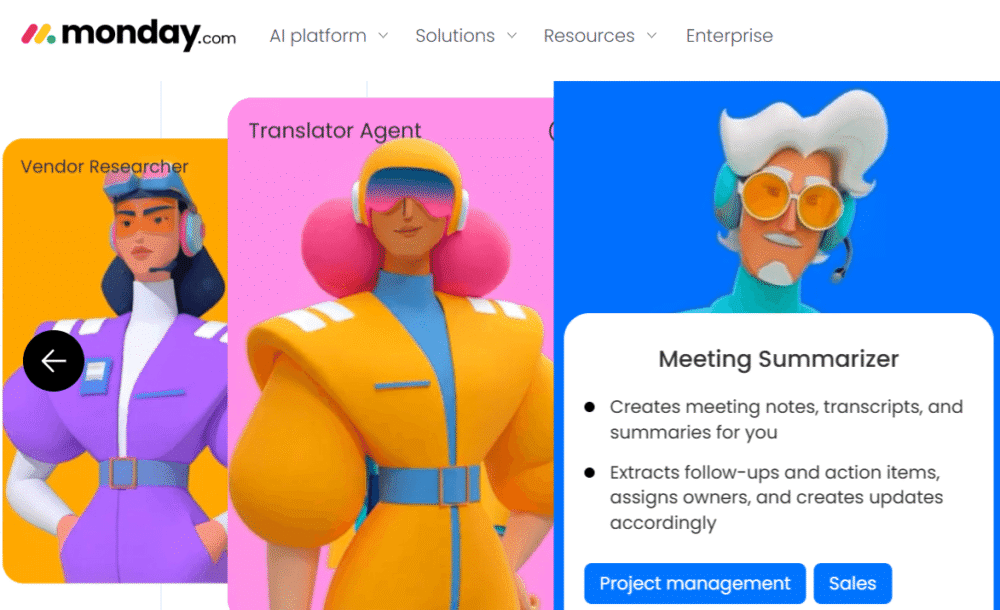
AI agents work best in situations where tasks are semi-structured, information-heavy, or likely to change. Examples include research, customer support triage, operations support, meeting preparation, sales assistance, content planning, and internal workflow help.
If the task is very simple and repeatable, basic automation may be enough. If the task is mostly conversation, a chatbot may be the better choice. But if the task needs steps, reasoning, and tool use, then an AI agent may be the right fit.
Frequently Asked Questions
How ai agents work in simple words?
In simple words, an AI agent takes a goal, breaks it into steps, uses tools if needed, checks results, and keeps going until the task is done or needs human help.
Are AI agents the same as chatbots?
No. Chatbots mainly answer questions. AI agents can also plan and act, which makes them more useful for multi-step tasks.
Do AI agents need memory?
Not always, but memory can make them much more useful. It helps them remember context, preferences, and task progress.
Can AI agents work without tools?
Yes, but they become much more powerful when connected to tools like search, email, calendars, databases, and business apps.
Should businesses use AI agents right away?
Not always. It is smarter to start with one focused use case, test carefully, and expand only after the workflow proves valuable.
Further Reading
If you want to keep learning, these related pages are a good next step:
- AI Agents Explained: The Complete Guide
- AI Agents vs Chatbots vs Automation
- AI Tools category
- AI Automation category
- IBM: AI agents overview
- OpenAI: reasoning models and agentic workflows
Final Thoughts
Now you have a clear picture of how ai agents work. They take a goal, plan the next step, use tools, check the result, and continue until the task is complete. That makes them different from chatbots and more flexible than basic automation.
The smartest way to use AI agents is to start small, add guardrails, and focus on one useful workflow at a time. That is how you get practical value without adding unnecessary complexity.
Want your tool or brand featured in this series? Sponsor opportunities are available. Contact us through the site.