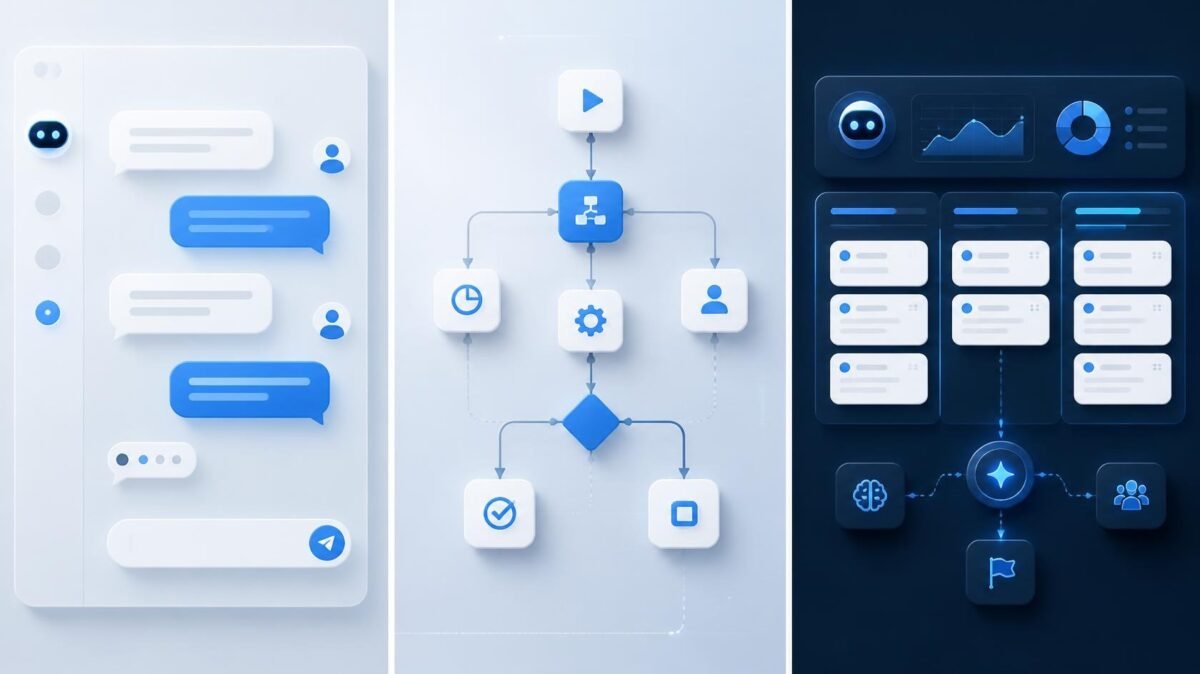
If you are comparing ai agents vs chatbots, the difference matters more than most people think. At first glance, both may feel like smart digital assistants, but they do very different jobs. A chatbot answers, automation repeats, and an AI agent can reason through a goal and take steps toward it.
This guide breaks the topic down in simple language so you can choose the right tool for your workflow. By the end, you will understand ai agents vs chatbots, where automation fits in, and how these systems are often used together in real-world business settings.
The Quick Answer
Here is the simplest way to think about ai agents vs chatbots:
- Chatbots answer questions and hold conversations.
- Automation follows fixed rules and repeats the same steps.
- AI agents work toward a goal, choose actions, and adapt when needed.
The short version is this: chatbots talk, automation runs, and AI agents act with more flexibility.
What Is a Chatbot?
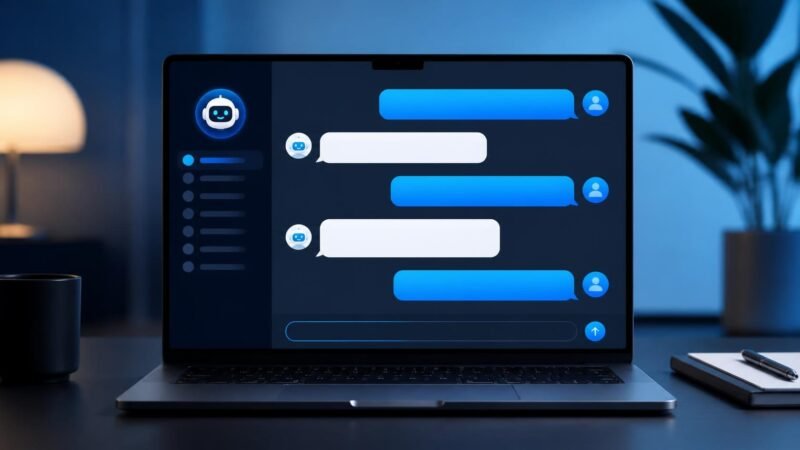
A chatbot is software built to communicate with people. You ask a question, and it gives you a response. In many cases, that response is based on a script, a knowledge base, or a language model.
Modern chatbots can sound very natural, which is why they are often confused with AI agents. But the main role of a chatbot is still conversation. It may answer questions, recommend articles, or guide users through a support flow, but it usually stops there.
Why businesses use chatbots:
- To answer common customer questions
- To reduce support workload
- To respond 24/7
- To guide users through simple tasks
What chatbots are not great at:
- Managing complex multi-step tasks
- Making flexible decisions across tools
- Adapting deeply when a process changes
What Is Automation?
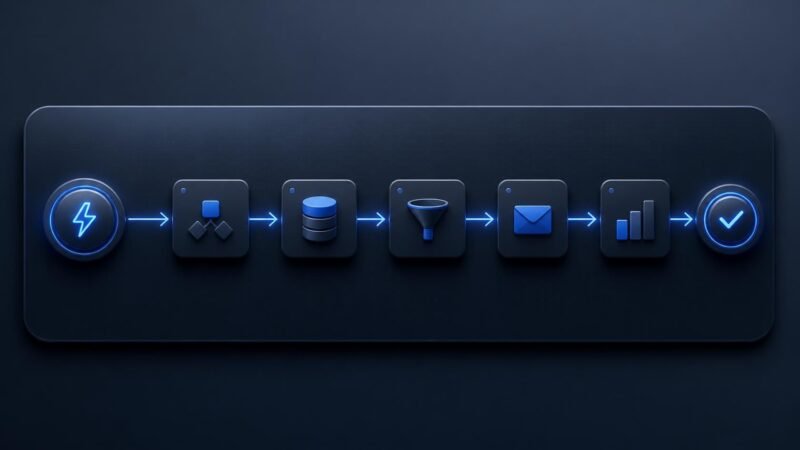
Automation means a system performs a task based on predefined rules. The logic is simple: when something happens, the system does something else. For example, when a form is submitted, the contact is added to a spreadsheet and a confirmation email is sent.
This makes automation very useful for repetitive work. It is fast, consistent, and easy to trust when the rules are clear. That is why many teams use automation for lead capture, notifications, file movement, approvals, and recurring admin tasks.
However, automation does not think. It does not reason through new situations. If the input changes or the process becomes more complex, the workflow may fail or need manual adjustment.
Best uses for automation:
- Sending routine emails
- Moving data between apps
- Creating reminders and notifications
- Running repeatable workflows
Limitations of automation:
- It cannot make judgment calls
- It breaks when the rules are too narrow
- It needs manual updates when the process changes
What Is an AI Agent?
An AI agent is a system that works toward a goal rather than just answering or following a fixed sequence. It can plan, use tools, check results, and adjust its next step based on what happens.
For example, if you ask an agent to compare three tools and summarize the best option, it may search, read, extract details, organize the findings, and draft a recommendation. That is why the conversation around ai agents vs chatbots is so important: agents do more than reply.
To go deeper into the basics, you can also read our main guide here: AI Agents Explained.
Why people like AI agents:
- They can handle changing tasks
- They can combine several tools
- They can reduce manual effort
- They are useful for research, operations, and planning
What to watch out for:
- They may make mistakes if poorly guided
- They need guardrails and review
- They can become expensive if overused
- They are more complex than basic automation
AI Agents vs Chatbots: What Is the Real Difference?
When people search for ai agents vs chatbots, they usually want a practical answer, not a technical lecture. The real difference is that chatbots respond to requests, while AI agents can decide how to move forward, use tools, and continue toward a result.
That means a chatbot is mainly interactive, but an AI agent is more action-oriented. A chatbot may tell you what to do next. An AI agent may help do the work with you, step by step.
| Feature | Chatbot | Automation | AI Agent |
|---|---|---|---|
| Main role | Conversation and answers | Repeat fixed steps | Work toward a goal |
| Decision making | Limited | None | Flexible reasoning |
| Tool use | Sometimes | Yes, in fixed flows | Yes, based on context |
| Best for | FAQs and support | Routine workflows | Complex tasks and mixed workflows |
| Handles surprises | Poorly | Poorly | Better, with limits |
| Setup difficulty | Easy | Easy to medium | Medium to advanced |
So, if you are deciding between ai agents vs chatbots, ask yourself one question: do you only need a response, or do you need a system that can take action and keep moving toward a goal?
Real-World Examples
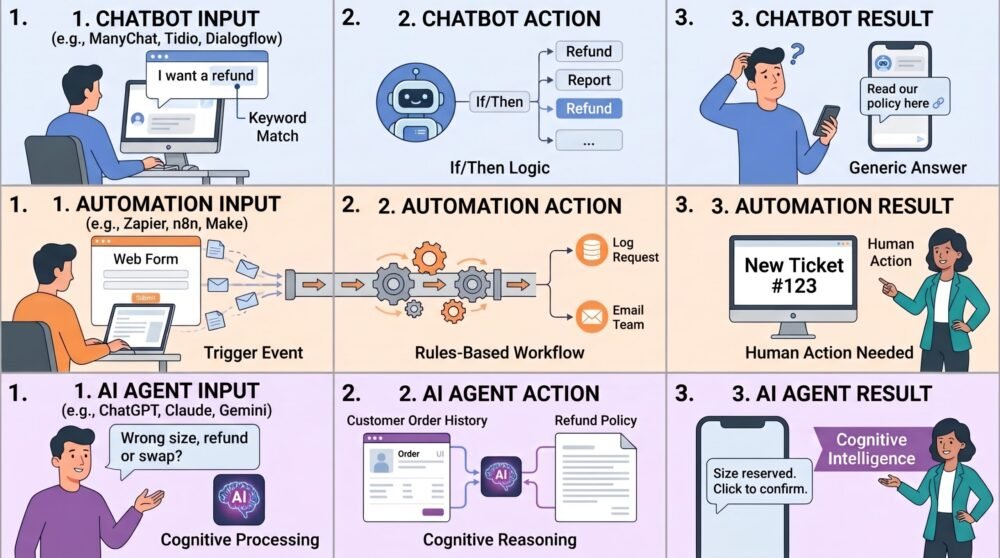
Let’s make this practical with a customer support example.
- Chatbot: A visitor asks for the refund policy. The chatbot replies with the policy and links to the help page.
- Automation: A refund form is submitted. The system logs the request, sends an email, and alerts the support team.
- AI agent: The agent reviews the request, checks the customer record, compares the case to the policy, drafts a response, and flags unusual situations for human approval.
This is where the difference becomes clear. The chatbot helps with communication. Automation handles repetition. The AI agent helps with decision-heavy work. In many modern businesses, all three systems work together.
Another example is content operations. A chatbot may help you brainstorm ideas. Automation may move drafts between tools. An AI agent may research topics, summarize sources, and build a draft outline for review.
Which One Should You Use?
The best choice depends on the task, the risk level, and how often the process changes.
- Use a chatbot when you need fast answers, support, or a simple conversational layer.
- Use automation when the task is repetitive, stable, and rule-based.
- Use an AI agent when the task requires judgment, tool use, and flexibility.
If you are a beginner, start with the simplest option that solves the problem. If your process is stable, automation is often the smartest place to begin. If your users need conversation, a chatbot may be enough. If the workflow changes often, then an AI agent may bring the most value.
For a stronger foundation, you can also read:
Common Mistakes to Avoid
- Calling everything an AI agent. A chatbot is still a chatbot if it mainly answers questions.
- Automating a messy process. Fix the workflow first, then automate it.
- Skipping human review. AI agents should not make high-risk decisions alone.
- Using too much complexity too early. Start simple, then expand.
- Ignoring permission settings. Limit access to tools and sensitive data.
If you are comparing ai agents vs chatbots for business use, the safest approach is to keep a human in the loop until the workflow has been tested thoroughly.
Frequently Asked Questions
Are ai agents vs chatbots the same thing?
No. In the ai agents vs chatbots comparison, a chatbot mainly responds to questions, while an AI agent can plan, use tools, and move toward a goal.
Can a chatbot become an AI agent?
Yes, if it is connected to memory, planning, and tools. At that point, it begins to behave more like an AI agent than a simple chatbot.
Is automation still useful if AI agents exist?
Absolutely. Automation is often faster, cheaper, and more reliable for repeatable tasks. AI agents are better for complex, changing work.
Which is better for small businesses?
Most small businesses should start with automation or a chatbot first, then add AI agents where judgment and flexibility are truly needed.
Do AI agents need human supervision?
Yes, especially for anything involving money, customer data, or external communication. Human review helps reduce risk.
Further Reading
If you want to keep learning, these related posts and resources are a good next step:
- AI Agents Explained: The Complete Guide
- What Is an AI Agent?
- Browse more AI Tools posts
- Browse more AI Automation posts
- Zapier: What are AI agents?
- IBM: AI agents overview
Final Thoughts
The key takeaway from ai agents vs chatbots is simple: chatbots answer, automation repeats, and AI agents act with more flexibility. There is no single best option for every situation. Choose the tool that matches the task, the risk, and the amount of control you want.
When in doubt, start small, test carefully, and add human review where it matters most. That approach gives you the best balance of speed, safety, and usefulness.