
Let’s be completely honest: for modern enterprise creative teams, mastering video pipeline automation is no longer just a fancy technical luxury, it is a fundamental requirement for surviving in today’s omnichannel digital landscape. Generating a single 15-second cinematic clip using a web UI prompt is great for testing, but that is no longer the bottleneck. The real crisis hits when organizations attempt to scale their video output from ten manual experiments to ten thousand targeted, multilingual, localized assets across global platforms. Traditional post-production workflows simply crumble under this strain, burdened by human-in-the-loop rendering, fragmented timeline management, and disconnected asset handoffs.
I’ve seen firsthand how engineering leaders are radically shifting away from interactive generative sandboxes toward fully automated, headless architectures. By leveraging modern video pipeline automation infrastructure, production studios and product teams are linking foundation models directly to structured enterprise databases, cloud rendering engines, and real-time inference layers. Let’s examine five enterprise-grade tools and developer platforms that make programmatic, end-to-end video production a reality today.
The Shift to Video Pipeline Automation
The enterprise creative stack has historically operated through linear, manual UI interfaces like Adobe Premiere Pro and DaVinci Resolve. Generative video disrupted this process by introducing synthetic media, but prompting standalone web apps simply replaced manual editing with manual prompt iteration. This is highly inefficient for scale and completely defeats the purpose of video pipeline automation.
A true enterprise workflow demands headless programmatic operation. Assets are dynamically generated via REST APIs, triggered by internal events (such as CRM status changes, catalog updates, or localized ad buys), and assembled using deterministic timeline instructions. Achieving video pipeline automation means video production has evolved into code execution, requiring deep integration with orchestration protocols and API ecosystems.
5 Cutting-Edge Video Pipeline Automation Platforms
1. Shotstack: The Cloud Video Editing and Assembly API
While generative diffusion models produce the raw visuals, enterprise media requires complex compositing: lower thirds, dynamic captions, audio leveling, transitions, and brand-safe watermarking. Shotstack serves as the programmatic orchestration layer for true video pipeline automation.
- Cloud-Native Timeline Rendering: Provides JSON-driven timelines that allow developers to programmatically layer text, audio, and visual assets without launching heavy desktop software.
- Multi-Model Ingestion: Connects upstream generative API outputs (from models like Runway Gen-3 or Luma Dream Machine) and stitches them into structured layouts in real time.
- Serverless Scalability: Concurrently renders thousands of tailored video variations within seconds, making personalized customer outreach frictionless.
2. Twelve Labs: Multimodal Semantic Ingestion
Automated pipelines cannot scale blindly; they require semantic understanding of visual and audio inputs. Twelve Labs provides proprietary foundation models (Marengo for visual embeddings and Pegasus for video-language reasoning) engineered exclusively for temporal understanding.
- Automated B-Roll Indexing: Ingests petabytes of raw enterprise footage, generating multimodal embeddings that enable pipelines to pull contextually perfect footage based on an AI-generated script.
- Zero-Shot Scene Segmentation: Programmatically identifies visual moments, emotional shifts, and speech cues to trigger automated cuts without manual logging.
- Precise Temporal Search: Replaces rigid metadata tagging with natural language queries, turning static DAM systems into dynamic video pipeline automation inputs.
3. Hedra (Character-1): Programmatic Expressive Digital Actors
Enterprise instructional design, customer support, and social campaigns often require consistent, emotive human presenters. Hedra has emerged as a state-of-the-art solution with its Character-1 model, purpose-built for high-fidelity avatar generation driven entirely by voice tracks.
- Unified Audio-Visual Synthesis: Synchronizes natural micro-expressions, head kinematics, and hyper-realistic phoneme alignment with input audio files.
- Rapid Generation Speed: Delivers sub-minute inference times for multi-minute character sequences, ideal for automated daily video summaries.
- Developer-Centric API: Enables pipelines to ingest dynamic text-to-speech outputs and instantly generate corresponding presenter footage at scale.

4. Fal.ai: Low-Latency Serverless Inference
Chaining together complex open-weight models demands significant DevOps overhead. Fal.ai resolves this by offering ultra-fast, serverless GPU infrastructure tuned specifically for media generation and robust video pipeline automation.
- Serverless Workflows: Allows engineering teams to prototype multi-node video workflows and deploy them instantly as auto-scaling API endpoints.
- Real-Time Optimized Inference: Drastically slashes queue times and cold starts through custom TensorRT optimizations and edge routing.
- Granular Pipeline Orchestration: Supports precise multi-pass generation, such as generating an image via FLUX, running an upscaler, and piping the output into an automated video node.
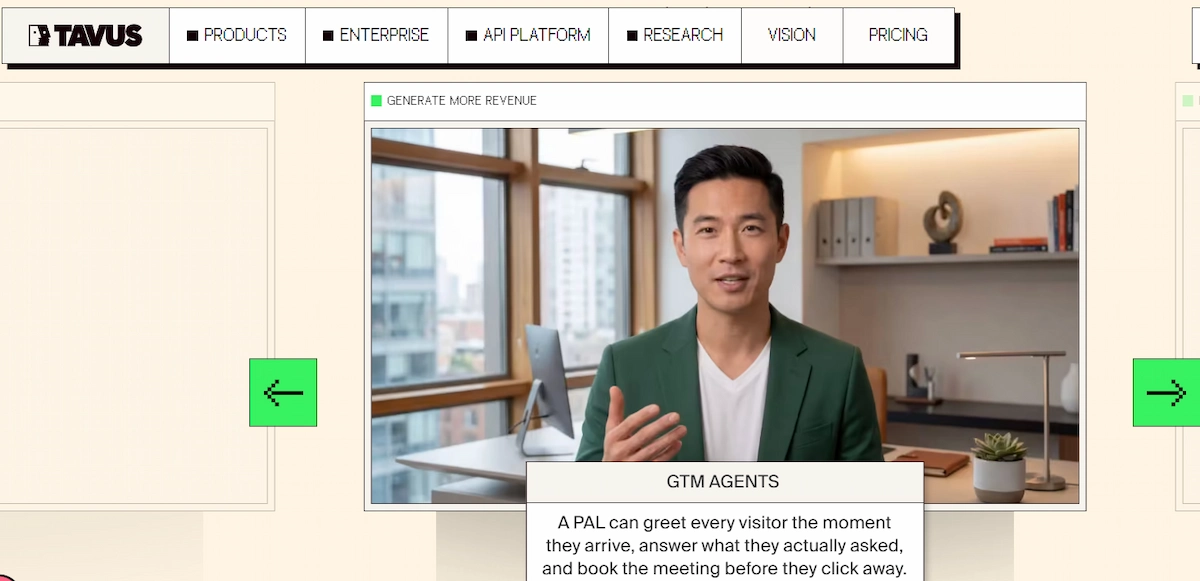
5. Tavus (Phoenix-2): Hyper-Personalized Conversational Video
For organizations looking beyond standard broadcast video into hyper-personalized, one-to-one communication, Tavus and its proprietary Phoenix-2 model lead the enterprise sector.
- Lip-Syncing and Face Rendering APIs: Dynamically adapts existing video base assets to speak novel scripts with perfect photorealistic mouth movement and vocal cadence.
- Dynamic Variable Injection: Video pipeline automation systems can automatically render personalized sales videos, onboarding clips, or account reviews using customer metadata.
- Bi-directional Streaming Capabilities: Powers interactive conversational video experiences with sub-second latency for real-time digital human interaction.
Feature & Architecture Comparison Matrix
To design an optimal video pipeline automation setup, technical architects must match the tool to its designated layer in the production lifecycle: semantic indexing, model orchestration, synthetic generation, or timeline assembly.
| Platform | Primary Role | Integration Method | Ideal Enterprise Use Case |
|---|---|---|---|
| Shotstack | Programmatic Timeline Editing | REST API / JSON Workflows | Automated localized video rendering and compositing |
| Twelve Labs | Multimodal Semantic Search | REST API / Python SDK | Automated archival discovery and contextual B-roll matching |
| Hedra | Digital Actor Synthesis | Cloud API Endpoints | High-volume instructional and dynamic presenter content |
| Fal.ai | Serverless GPU Diffusion | TypeScript/Python SDKs | Custom generative workflows and chained diffusion models |
| Tavus | Lip-Sync & Face Modeling | REST API / WebRTC | Scalable 1-to-1 dynamic client personalization |
The Enterprise Horizon: Autonomous Production at Scale
Modern enterprises no longer measure AI capability by novelty prompts; they measure it by pipeline resilience, latency, and return on compute. Moving from manually operated desktop tools to API-driven compositing lines allows brands to shift video production from a cost center to a real-time, personalized distribution channel. As serverless inference continues to drop in cost and foundation models natively master multi-second temporal continuity, sophisticated video pipeline automation will soon power everything from dynamic video software documentation to fully localized global ad campaigns executed without human hands ever touching an editing timeline.
Explore More on The NexGen AI
- The Vibe Coding Blueprint: Building Autonomous Software Pipelines
- The Enterprise Guide to Multi-Agent Automation Architectures