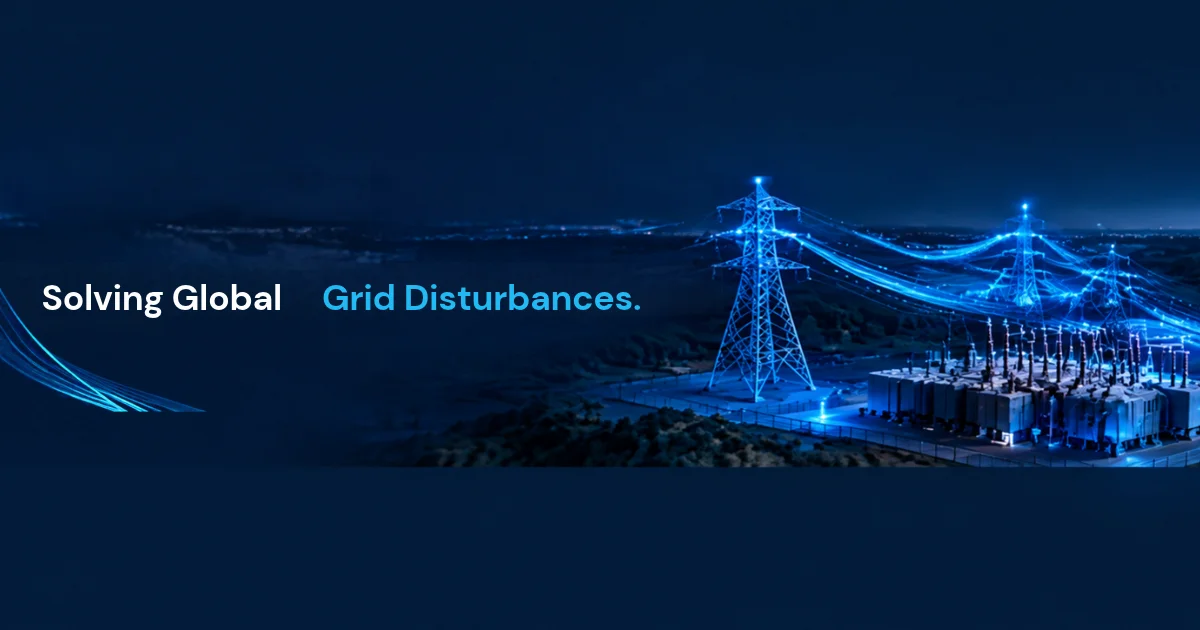
Coordinated grid disturbances have posed significant challenges for the global energy sector, leading to synchronized power drops and testing infrastructure resilience. A team of researchers in Germany has recently introduced an innovative solution that tackles these frequent frequency fluctuations, providing essential insights for enhancing the security of modern, low-inertia power networks against potential systemic feedback loops.
Understanding Coordinated Grid Disturbances
The phenomenon of coordinated grid disturbances involves widespread, simultaneous fluctuations in electrical frequency across distinct regional power grids. This challenge has grown increasingly daunting due to the complex interaction between legacy transmission lines, renewable inverter-based resources, and massive clusters of digital infrastructure. Researchers discovered that these occurrences were not isolated anomalies; rather, they were tied to automated background tasks running simultaneously on thousands of connected power-regulation assets.
The Investigation: Tracing the 60-Second Ripple
TenneT Germany, the country’s largest transmission operator, originally flagged recurring oscillations across the European grid and brought the puzzle to academic researchers. Using ultra-precise power quality monitors sampling frequency, voltage, and current every three seconds on the Jülich research campus, the team tracked a distinct power spike occurring precisely every minute.
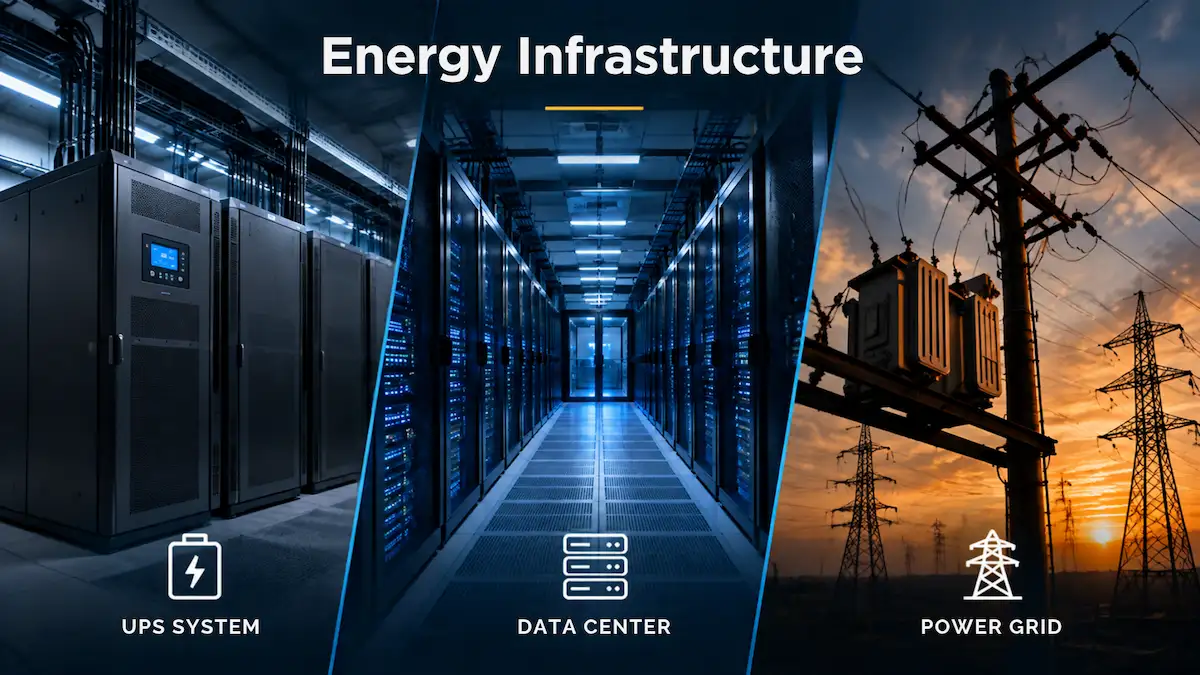
According to reporting by TechCrunch, the root cause wasn’t hydropower resonance or traditional generator cycling, but rather fleets of stationary batteries and enterprise Uninterruptible Power Supply (UPS) systems running state-of-charge diagnostics on a synchronized 60-second clock. Individually imperceptible, the cumulative power draw of these devices creates a measurable ripple across global grids.
The Ireland Case Study: Data Centers and Grid Stress
To validate their models, the researchers examined high-penetration data center markets like Ireland, where facilities accounted for approximately 18% of total electricity grid load. System data from transmission operator EirGrid revealed that the amplitude of minute-by-minute frequency drops escalated dramatically from 3 millihertz in 2016 to 12 millihertz by 2021, with some modern dips exceeding 20 millihertz.
Because Ireland’s 50 Hz grid is designed to maintain strict frequency tolerances, these compounded ripples threaten to edge low-inertia networks closer to instability limits, necessitating software updates rather than costly hardware overhauls.
Key Technologies in Identifying and Mitigating Disturbances
The team employed advanced analytics and digital modeling frameworks to isolate and resolve the grid disturbances.
| Technology | Purpose |
|---|---|
| Machine Learning & Big Data | Predict and model frequency patterns across regional grids. |
| Grid-Scale BESS Controllers | Manage energy storage response and synthetic inertia injection. |
| IoT & UPS Telemetry Sensors | Real-time high-frequency data collection to locate background anomalies. |
| Randomized Scheduling Software | Introduce jitter and offsets to prevent device-level synchronization. |
The Software-Driven Solution Framework
The primary recommendation stemming from the research is remarkably straightforward: software coordination. Manufacturers of UPS systems and grid-scale battery storage must implement randomized time offsets for internal state-of-charge diagnostics rather than defaulting to execution at the exact start of every minute.
By breaking this synchronization, operators can eliminate the 60-second ripple entirely.
import pandas as pd
from sklearn.ensemble import RandomForestClassifier

# Load high-frequency grid sensor data
data = pd.read_csv('grid_frequency_telemetry.csv')

# Feature selection and anomaly detection model
model = RandomForestClassifier(n_estimators=100, random_state=42)
X = data[['voltage_dip', 'current_spike', 'minute_interval']]
y = data['coordinated_disturbance']
model.fit(X, y)

# Predict recurring disturbances
y_pred = model.predict(X)
print("Predicted frequency anomalies:", y_pred)Future Prospects and Power Grid Resilience
As the energy sector moves forward with its transition to renewable generation and decentralized storage, it will be crucial to understand the subtle cyber-physical interactions, such as synchronized UPS checks. Implementing these software patches will safeguard sensitive turbine infrastructure from excessive wear and help ensure that future low-inertia grids are resilient against scaling challenges.