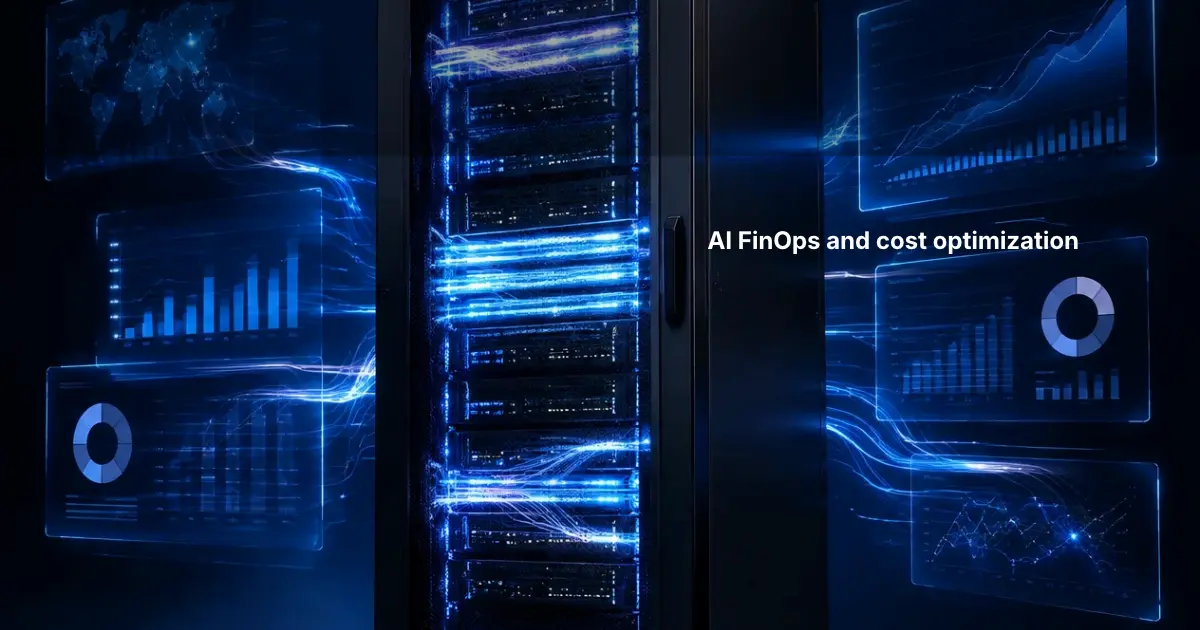
AI Inference Costs now represent the largest part of enterprise generative AI budgets once a model is in production. These costs increase with each user’s request, whereas training expenses remain fixed. For CTOs and AI Directors, the solution to reducing AI inference costs lies in architecture rather than contracts: direct traffic to appropriately sized models, cache repeated contexts, compress prompts, quantize weights, batch non-urgent tasks, and install FinOps guardrails for each feature. Teams that leverage these strategies can often reduce AI inference costs for specific workloads by 40 to 80 percent without compromising quality. This brief ranks seven effective strategies by ROI, presents the market data supporting them, and provides your team with a framework to measure cost per successful task this quarter.
1. Understanding AI Inference Costs
AI inference is the recurring bill of the generative AI era. Training is a capital-style event, but inference is an operating expense that grows with adoption, context length, and agentic workflows that make many model calls per user action. The Stanford AI Index reported that the price of querying a model at GPT-3.5-level performance fell more than 280-fold in roughly two years, yet total enterprise bills keep rising because usage, prompt size, and reasoning-token consumption are growing faster than unit prices fall.
The first win is measurement. Track cost per successful task, not just cost per token. A cheap model that fails 30 percent of the time and forces retries is more expensive for your overall AI inference costs than a premium model that succeeds on the first call. Tag every request with feature, customer tier, model, and outcome so finance and engineering share one source of truth. You cannot optimize what you cannot attribute.
2. Why AI Inference Now Outweighs Training Spend
For most enterprises that consume foundation models through APIs or open-weight deployments, training is a minor line item. Fine-tuning runs are bounded and occasional, while production AI inference runs around the clock. As copilots, support agents, and document pipelines move from pilot to default workflow, the volume curve bends sharply upward and unit economics become the deciding factor in whether a use case survives its first budget review.
The strategic implication is that margin, not capability, is becoming the differentiator in AI Inference Costs. Vendors and internal platform teams that deliver acceptable quality at a lower AI inference cost per task will win renewals and internal funding.
| Optimization Lever | Indicative Impact | Implementation Effort | Best Fit |
|---|---|---|---|
| Model routing | 30 to 70 percent lower spend on routed traffic | Medium | Mixed-complexity workloads |
| Prompt caching | Discounts up to 90 percent on cached input tokens, varies by provider | Low | Long, repeated system prompts |
| Batch APIs | Around 50 percent discount at major providers | Low | Offline and asynchronous jobs |
| Prompt compression | 20 to 40 percent fewer input tokens | Low to Medium | RAG and JSON-heavy pipelines |
| Quantization | 2x to 4x lower memory footprint | Medium to High | Self-hosted open-weight models |
3. Route Requests to the Right Model Size
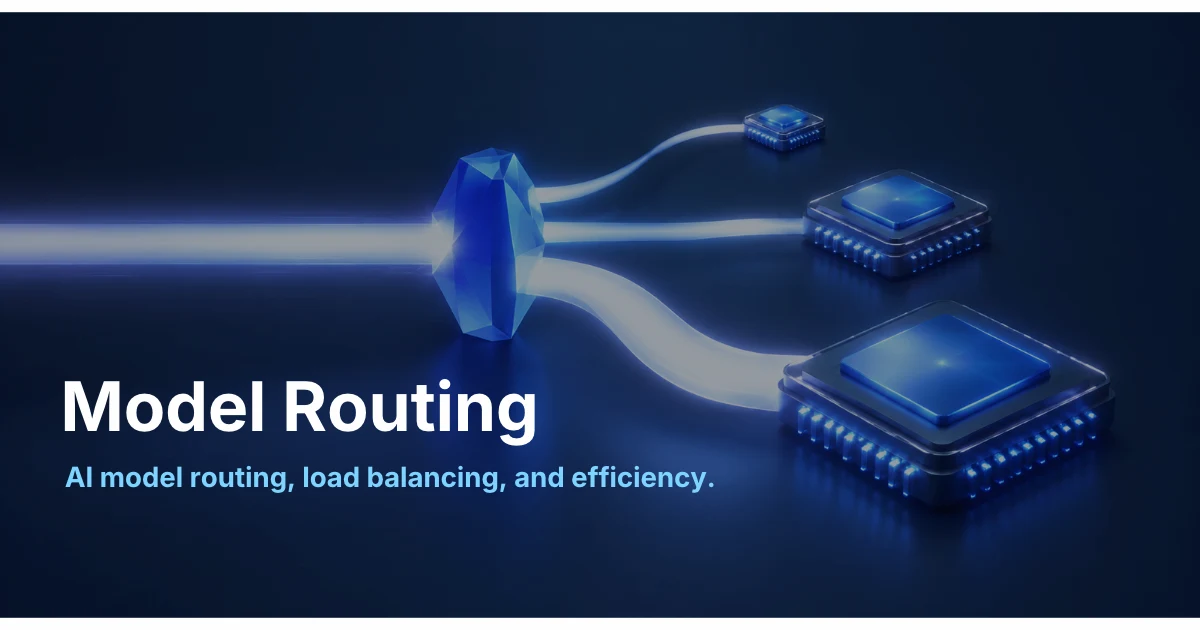
Most production traffic does not need a frontier model. Classification, extraction, summarization of short text, and routine support answers are handled well by small, fast models, while complex reasoning and ambiguous requests justify premium tiers. A lightweight router, either rules-based or a small classifier, can send each request to the cheapest model that meets a quality threshold and escalate only on low confidence.
Build this with an evaluation set from your own traffic, not public benchmarks. Define pass criteria per task, measure each model against it, and set routing thresholds from the data. Add a fallback path so failures escalate automatically. Done well, routing is typically the highest-ROI change because it reduces spend without touching the user experience, and it keeps you vendor-flexible as prices shift. Providers such as OpenAI (API Pricing) now offer multiple model tiers precisely to support this pattern.
Example: Basic Rules-Based Router (Python)
import tiktoken

def route_inference_request(prompt_text, user_tier="standard"):
    """
    Routes inference requests to the most cost-effective model
    based on token volume, complexity triggers, and user tier.
    """
    # 1. Initialize tokenizer
    encoding = tiktoken.get_encoding("cl100k_base")
    token_count = len(encoding.encode(prompt_text))

    # 2. Define complexity triggers (keywords requiring advanced reasoning)
    complex_triggers = ["analyze", "synthesize", "evaluate", "architect"]
    is_complex = any(trigger in prompt_text.lower() for trigger in complex_triggers)

    # 3. Routing Logic
    if user_tier == "premium":
        # Premium customers always get the frontier model
        return "gpt-4o"

    if token_count < 1000 and not is_complex:
        # 80% of routine traffic: fast, cheap model
        return "gpt-4o-mini"

    # Default fallback for heavy context or complex reasoning
    return "gpt-4o"

# Execution
selected_model = route_inference_request("Extract the invoice date from this text...")
print(f"Routing request to: {selected_model}")
4. Cache Aggressively and Trim Tokens
Tokens serve as the billing unit, meaning that any unnecessary tokens result in waste. Begin with prompt caching: when a lengthy system prompt, policy document, or tool schema reuses across calls, providers charge a lower rate for the cached part and also decrease latency. Organize prompts by placing static content first and dynamic content last to enhance cache utilization. Implement semantic caching at the application layer for commonly asked questions.
Then compress to reduce AI inference costs further. Strip verbose instructions, replace prose with compact JSON schemas, limit retrieved chunks to the top few relevant passages, and cap output length. Reasoning models deserve special attention because hidden reasoning tokens can dominate the bill, so set effort levels by task. To model savings before you ship, download the API Cost Calculator and JSON Token Optimization Framework and run your own traffic profile through it.
5. Quantization and Distillation for Self-Hosted Models
When you run open-weight models, precision is your most important cost dial. Reducing weights from 16-bit to 8-bit or 4-bit cuts memory needs by two to four times. This allows you to run bigger models on your current hardware or use fewer GPUs. Because quality loss is often minor for tasks like extraction or classification, test it against your data before you launch.
Distillation offers even more savings. You can use a powerful model to create high-quality labels for your work, then train a tiny model to copy those outputs. You gain a fast, inexpensive model that is built for your specific needs. However, this requires more engineering time and maintenance. Use this approach only for stable, high-volume projects where the investment pays for itself quickly.
6. Batching, Scheduling, and Hardware Choices
Not every workload is interactive. Nightly document processing, enrichment jobs, evaluation runs, and bulk content generation can move to batch endpoints, which major providers discount by around 50 percent in exchange for relaxed completion windows. For self-hosted stacks, serving engines with continuous batching and paged attention, such as vLLM, can raise throughput several-fold on the same GPUs by keeping accelerators saturated.
Hardware strategy matters too. Compare on-demand, reserved, and spot capacity using dedicated AI hardware like AWS Inferentia, and evaluate current-generation accelerators optimized with NVIDIA TensorRT against your latency targets. The cheapest GPU hour is not always the cheapest token. To succeed in your AI Inference Costs control strategy, measure tokens per second per dollar under your real prompt mix, and revisit the decision each quarter as hardware and pricing evolve.
7. Governance: FinOps for AI
Finally, align commercial terms with the architecture. Negotiate committed-use discounts only after routing and caching have stabilized your baseline, and keep an abstraction layer so you can switch providers when price-performance shifts. The executive scorecard below summarizes what to ask your team for next quarter.
- Baseline: Cost per successful task by feature, reported monthly.
- Routing: Percentage of traffic served by small models, with quality parity evidence.
- Caching: Cache hit rate and average cached-token share per request.
- Batching: Share of non-interactive workloads moved to batch endpoints.
- Efficiency: Tokens per second per dollar on self-hosted infrastructure.
- Governance: Budget alerts, rate limits, and cost reviews in place for every AI feature.